Some towns chase the future. Clayton remembers the past.

Here, at the geographic heart of Barbour County, the roads that once carried settlers from the Pea River to the Chattahoochee still wind through fields and timber. The courthouse square still anchors the town. The churches still ring their bells on Sunday mornings.

Clayton isn’t a destination for those seeking amusement. It’s a place for those seeking stillness — a quiet corner of Alabama where history lives not behind glass, but in the grain of old wood, the shape of rooflines against the sky, and the unhurried pace of a community that has endured.

All roads lead to Clayton. Come see what remains.

About Clayton — Rooted in History

A Town at the Crossroads

Historically, the town was located at the headwaters of the Pea and Choctawhatchee rivers on this historic road from Hobdy’s Bridge over the Pea River to Eufaula on the Chattahoochee River. Before there were highways, there were trails. And where trails crossed, towns were born.

By 1818, there were a few settlers in the area around Clayton, but settlement began in earnest around 1823. The town was named for Augustine S. Clayton, a Georgia jurist, and became the county seat of Barbour County in 1833. Clayton was laid out on a central courthouse square plan. The first Circuit Court was held in Clayton on September 23, 1833. 

Clayton is one of only a few places in Alabama where you’ll find a dual-courthouse arrangement — a unique compromise dating to 1879 that allows both Clayton and Eufaula to serve as seats of county government. It’s a testament to our town’s staying power and the value our neighbors have always placed on keeping Clayton at the center.

Clayton, with a population of 200, was incorporated on December 21, 1841, by the Alabama Legislature.  In those early decades, dry goods stores and mercantile businesses lined the square. Families built homes meant to last generations. And for a time, Clayton was the commercial and civic center of the county.

Then came Eufaula’s rise. The railroad. The lake. The world moved faster, and Clayton stayed still.

That stillness is not emptiness. It is preservation. It is memory made visible.

Clayton is not a place to do things. It is a place to be.

Come here to slow down. To breathe. To walk streets that haven’t changed in decades. To sit on a bench near the courthouse square and watch the afternoon pass. To eat a meal prepared by hands that know the community by name.

This is not a weekend escape packed with itineraries. This is a place to lay down the weight of hurry and remember what it feels like to be unhurried.

All roads lead to Clayton. But once you arrive, you may find there’s no rush to leave.

What Remains — Historic Landmarks

Clayton is not a museum town with roped-off rooms and velvet barriers. It is a living archive — four places listed on the National Register of Historic Places and one designated a National Historic Landmark, all within a community of fewer than 3,000 souls.

The Henry D. Clayton House (National Historic Landmark)

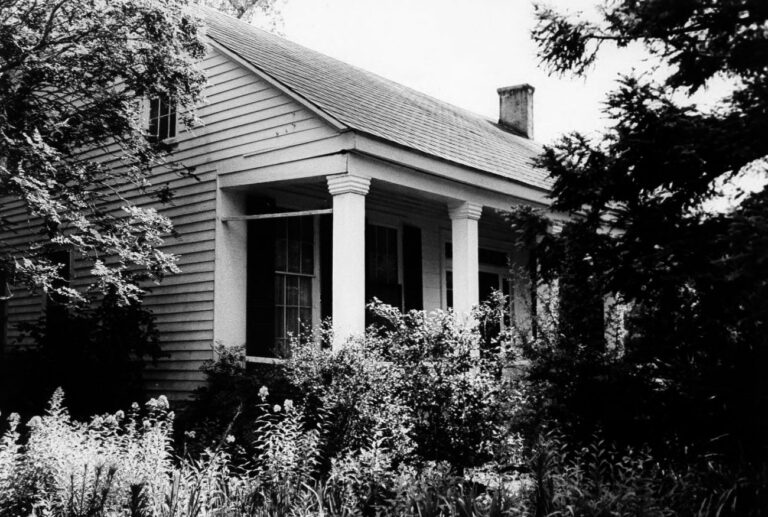
The Henry D. Clayton House is a historic plantation house in Clayton, Alabama, most notable as the birthplace and childhood home of Henry De Lamar Clayton, Jr. (1857–1929), a legislator and judge. Wikipedia The younger Clayton authored the Clayton Antitrust Act of 1914 — a law that reshaped American commerce and bears this town’s name to this day.

The house was built by his father, Confederate General Henry DeLamar Clayton, Sr. It was declared a National Historic Landmark on December 8, 1976. Wikipedia The Henry D. Clayton House is located approximately 1 mile from Clayton on a remnant of the former 1,000-acre Clayton Plantation. Wikipedia

The Octagon House (National Register of Historic Places)

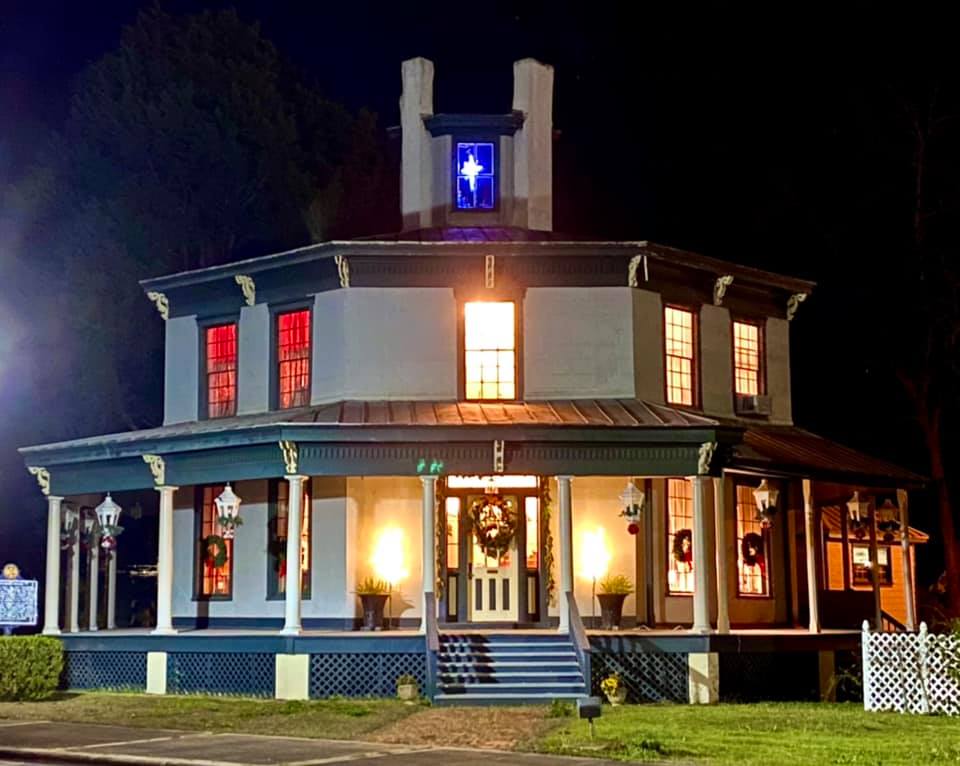
The Octagon House, also known as the Petty-Roberts House, is a historic home in ClaytonBarbour County. It was constructed between 1859 and 1861 by Benjamin Franklin Petty, a successful businessman. The Clayton house is believed to be the only surviving antebellum purely octagonal design in the southeastern United States that made use of the “gravel wall” building method, creating what is commonly referred to as a “concrete house.” The building is an outstanding example of the octagon type of architecture, which was widely popular in the 1850s. It is an Alabama Historical Landmark and was added to the National Register of Historic Places in 1974.

Petty, the original owner of the house, settled in Clayton in 1834 and was a prominent citizen of the town until his death in 1876. 

The Miller-Martin Townhouse (National Register of Historic Places)

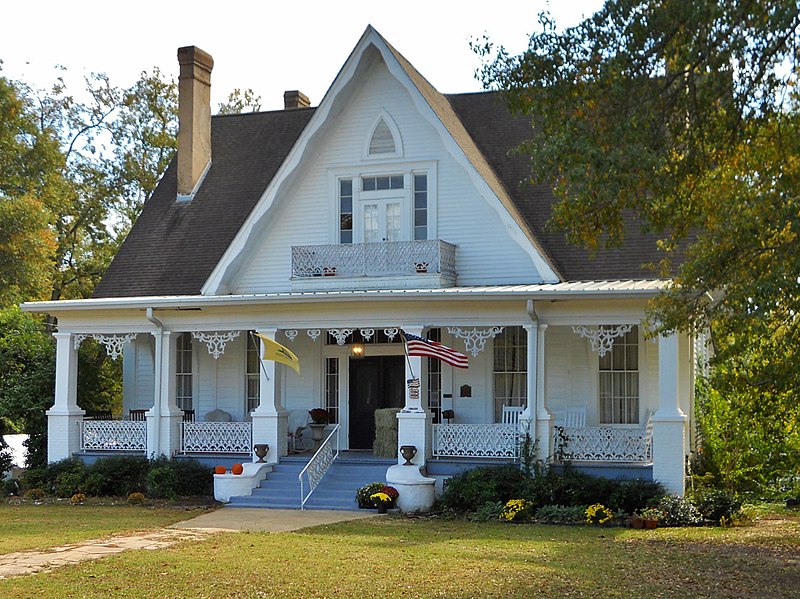
John H. Miller built this Gothic Revival townhouse in 1859. He and his wife moved from Orangeburg, South Carolina, to Barbour County in the early 1830s, settling in an area which would become known as the Tabernacle community. He later purchased a tract of land in Clayton on which this house was constructed. It is noteworthy for the hand-painted murals on the entrance hall ceiling, which depict The Four Seasons as well as other designs on the parlor and dining room ceilings. This work has been attributed to an artist named Massillon. 

John Council and Alice Floyd Martin purchased the home in 1915. The townhouse was placed on the National Register of Historic Places in December 1974. Ann Floyd Martin Miller donated the property to the Clayton Historical Preservation Authority in 1983. In 1998, Mr. and Mrs. Charles Sewell purchased an extensively renovated townhouse. 

The Octagon House (National Register of Historic Places)

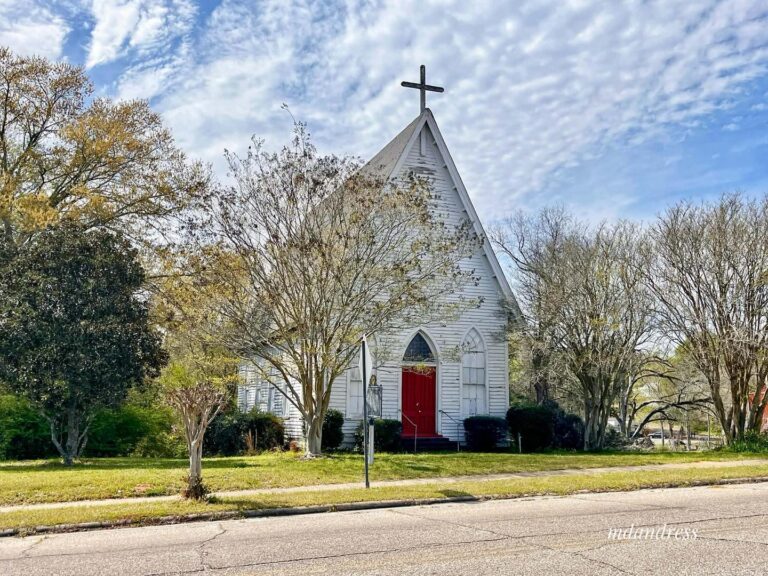
This church had its origins in a mission station established by the Reverend J. L. Gay in 1844.

On May 10, 1872, the mission was formally accepted in the Diocese of Alabama as Grace Church. Construction of a church building began in 1875 on a lot owned by General Henry DeLamar Clayton and his wife Victoria. The Gothic Revival style building was completed on February 26, 1876 at which time the lot was deeded by the Claytons to the Protestant Episcopal Church of the State of Alabama. 

The church was consecrated on November 14, 1876, by Bishop Richard Hooker Wilmer, the Bishop of Alabama, in a ceremony that ritually dedicated the building for divine worship according to Episcopal tradition.[2][8] During this formative period, the mission and new parish were served by clergy including Revs. Thomas J. Bland, DeBerniere Waddell, and E. W. Spalding.[2]

The Whiskey Bottle Tombstone Folklore

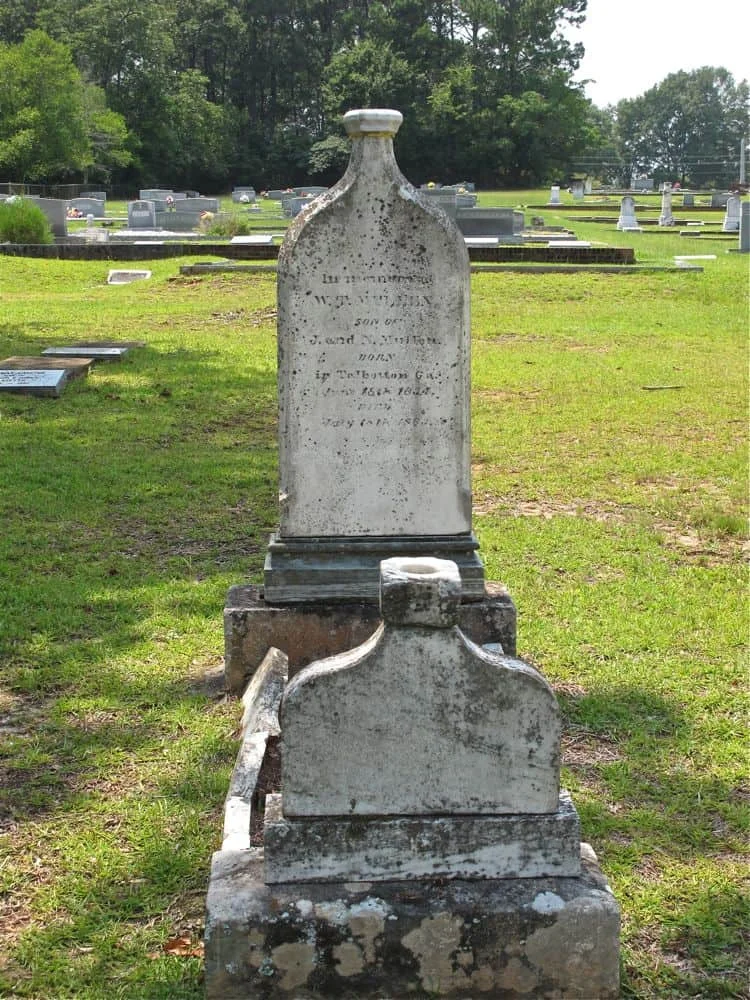
On July 18, 1863, the townsfolk of Clayton, Alabama, buried William T. Mullen between two bottles of whiskey. The specially shaped tombstones are a fitting tribute to a man who loved his drink.

Mullen lived hard and died young. He was born in Talbotton, Georgia, on June 18, 1834. By 1860 he had moved to Clayton and met the county jailor’s daughter, a young woman named Mary Williams. The two married at the jail on September 11 of that year. Just four months later, Alabama formally withdrew from the Union. Though Mullen volunteered to serve in the Confederate army and became second lieutenant of the 5th Alabama Infantry, he lasted two months before he resigned and returned to Clayton.

The year after William came home, he and Mary had a daughter, also named Mary. But family life was less than harmonious. William’s constant drunkenness reportedly upset his wife so much that she threatened to bury him beneath a bottle-shaped tombstone when he inevitably died young. In 1863, her prophecy came true. William did indeed die from the effects of excessive drinking, and Mary kept her promise. William’s gravesite at Clayton City Cemetery has not one but two bottle-shaped tombstones on it, one at his feet and the other at his head.

Sadly, baby Mary died just one month after her father. She is also buried at the cemetery.

The Landscape of Memory

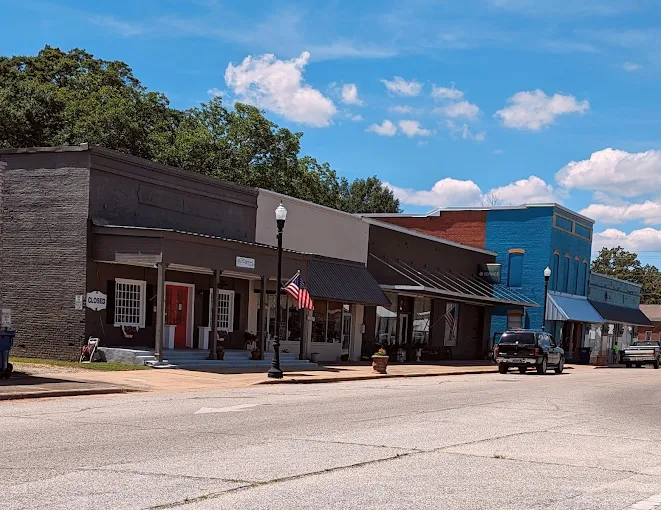
Walk through Clayton and you will see what time does to a place when the world moves on.

Storefronts with faded lettering. Brick facades softened by decades of weather. Porches that have held generations of conversations. Some buildings stand proud; others lean into the past. This is not decay for its own sake. This is the archaeology of a living town — layers of history visible to anyone who cares to look.

There are three restaurants in town. No chain hotels. No tourist traps. What Clayton offers cannot be packaged or sold. It can only be experienced: the sound of birds in the morning, the long shadows of late afternoon, the particular quiet that settles over a place where no one is in a hurry.

It warms my heart to see people share their stories of growing up there and of the things of the past that bring good memories to them. Jacksons Ramblings Visitors often find that Clayton stirs something in them — a recognition, perhaps, of the small towns of their own childhoods, or the childhoods of their parents and grandparents.

Hidden Treasures

The Courthouse Square

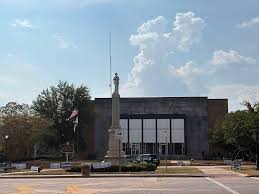
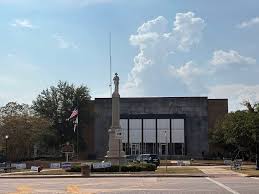
The original courthouse was a log structure, later replaced by a brick neoclassical building in 1852. By the 1870s, the city of Eufaula had far outpaced Clayton in population growth and commercial importance. Encyclopedia of Alabama Rather than lose the seat entirely, Clayton and Eufaula reached an unusual compromise in 1879 — Clayton and Eufaula citizens agreed to build an additional courthouse in Eufaula. Under the arrangement, criminal and civil matters arising in the eastern half of the county were heard in Eufaula, while those in the western half were heard in Clayton. The unique arrangement still stands.
The Downtown Murals

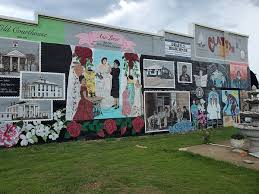
In recent years, local artists and community members have added murals to Clayton's downtown, celebrating the town's heritage and breathing color into weathered walls. These aren't slick or corporate — they're homegrown expressions of pride in a place that many have forgotten.
The Country Roads

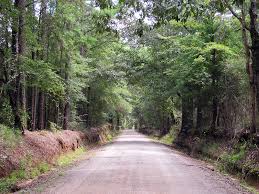
The real treasures of Clayton are often found on the back roads — old farmsteads, country churches, fields that stretch to the tree line. Barbour County Wildlife Management Area, located near Clayton off Barbour County Road 49, offers outstanding deer, turkey, and quail hunting opportunities. Eufaulachamber But even if you don't hunt, these roads reward the curious — the ones willing to drive slowly, stop often, and look.